Why Does My Jaw Hurt? Common Misconceptions That Make It Worse
By the team of dental professionals at Selkirk Dental Clinic | Serving Revelstoke, BC and surrounding communities

Jaw pain is one of the most frequently misunderstood dental symptoms. Most people reach for a painkiller, assume it will pass, and unknowingly do things that make it worse. This article covers what actually causes jaw pain — and the common mistakes that keep it from getting better. We also explain when to know if a dental appointment with a TMJ specialist is necessary and some tips for treating it at home when the discomfort is minor and does not require medical attention from your dentist.
Looking for a dentist to assess your jaw pain? Selkirk Dental services Revelstoke BC and the surrounding communities with professional dental services.
Article Takeaways
Most people managing jaw pain on their own are treating the symptom, not the cause — and that's why it keeps coming back.
Stress, sleep position, and daytime clenching are among the most overlooked contributors to ongoing jaw pain.
A dental assessment is the only reliable way to identify what's actually driving the pain and put together a plan that works.
Why Is My Jaw So Sore All of a Sudden?
Sudden jaw soreness that appears without an obvious trigger is usually one of a few things: a grinding episode during sleep, a stress response that caused overnight clenching, inflammation in the jaw joint, or the early sign of a dental infection. It can also follow an unusually long dental appointment, a wide yawn, or eating something particularly hard or chewy the day before.
In most cases, sudden jaw soreness that eases within 24 to 48 hours and does not come back is not a cause for concern. What warrants attention is soreness that persists, worsens, or keeps returning — that pattern usually points to something that needs to be properly identified rather than waited out.
Why Does My Jaw Chronically Hurt?
Jaw pain can stem from several different sources, which is part of why it is so often misdiagnosed or self-managed incorrectly. In fact, most jaw pain is a symptom of an underlying issue rather than a standalone problem. The jaw is a complex joint that involves muscles, tendons, bone, and nearby teeth — and a problem in any one of those areas can create pain that feels similar on the surface.
The most common causes of jaw pain include:
temporomandibular disorders, including TMJ dysfunction; arthritis can also affect the temporomandibular joint and cause inflammation
Teeth grinding (bruxism), often during sleep
A misaligned or bad bite
Dental problems, including tooth decay, gum disease, or an abscessed tooth; untreated cavities can lead to jawbone infections
Wisdom teeth pressure
Stress-related jaw clenching
Sinus congestion or sinus infections putting pressure on the upper jaw; sinusitis can mimic jaw pain
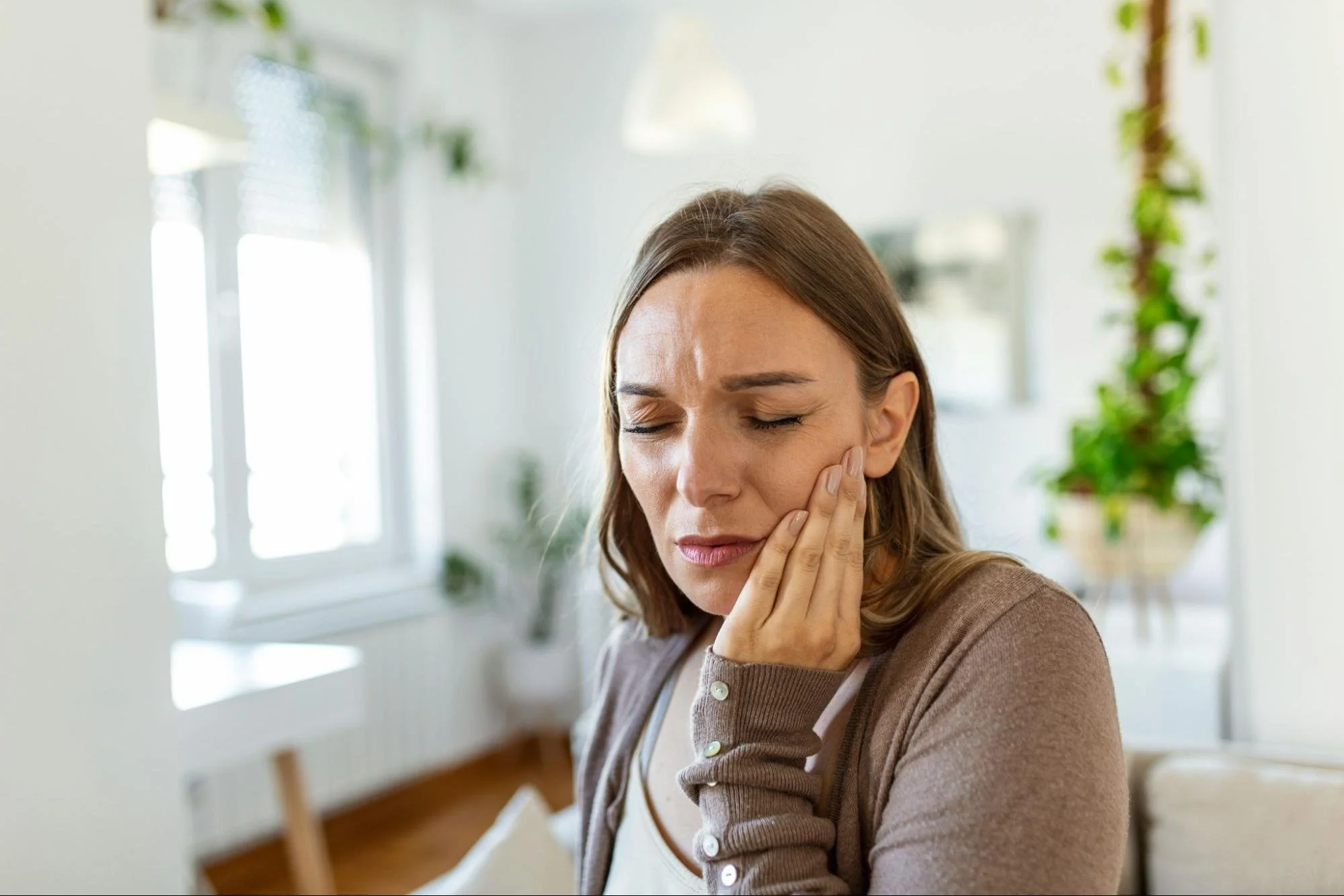
Common Misconceptions About Jaw Pain
This is where most patients go wrong. The following are widely held beliefs about jaw pain that dental professionals frequently have to correct.
1. Myth: "If I can open my mouth, it probably isn't serious."
Many significant jaw joint issues — including early TMJ disorder and tooth infections — present with full or near-full range of motion. These conditions can affect the jaw joints and the muscles surrounding them, which you use every time you move your jaw. The ability to open wide does not rule out a problem that needs attention. Pain, clicking, or tension that persists for more than a week is worth having assessed, especially because TMJ disorder is part of a broader group called temporomandibular disorders and can come with other symptoms. It is estimated thatnearly a third of the global population suffers from temporomandibular disorders: this is not an uncommon disorder!
2. Myth: "Ibuprofen will fix jaw pain if I take it long enough."
Anti-inflammatories can offer temporary pain relief for jaw pain, but they do not address the source or replace professional care. If the cause is grinding your teeth, a misaligned bite, or an infection, the pain will return — often worse — once the medication wears off. Long-term reliance on pain medication without diagnosis can also mask warning signs, and severe pain should not be managed with repeated medication alone.
3. Myth: "Jaw pain on the left side must be a dental problem."
Left-sided jaw pain — especially pain that radiates to the chest, arm, back, or lower jaw — can be an early symptom of a cardiac event. This is one of the jaw pain presentations that needs immediate medical care. If jaw pain on one side appears suddenly alongside pressure in the chest, shortness of breath, or dizziness, go to the emergency room immediately.
4. Myth: "My jaw pain is just stress. I'll wait it out."
Stress is a genuine contributor to jaw pain — emotional stress can trigger clenching and bruxism, often without the person noticing. But "stress-related" does not mean "harmless." Untreated grinding wears down tooth enamel, causes nerve sensitivity, and is a major cause of muscle pain in the jaw. Research suggests that 85–90% of people will experience some degree of teeth grinding or clenching at some point in their lives — and for many, it goes unnoticed until jaw pain or tooth wear prompts a dental visit.
5. Myth: "Heat is always the right remedy for jaw pain."
Applying heat to an inflamed jaw joint can increase swelling and worsen pain, so the right remedy depends on whether the issue is muscular or severe joint inflammation. Heat is appropriate for muscle tension and stiffness, but if the underlying issue is joint inflammation or infection, cold therapy is typically more effective in the short term. The right approach depends on what is actually causing the pain, and home remedies are only a starting point if symptoms continue.
What Makes Jaw Pain Worse?
Beyond misconceptions, certain everyday habits are known to aggravate jaw pain regardless of the underlying cause.
Chewing gum
Gum chewing creates sustained, repetitive load on the jaw joint and surrounding muscles, especially if you chew gum often. For someone already experiencing jaw discomfort, this keeps the joint in a constant state of low-grade irritation and prevents the muscle tissue from recovering, so cutting back on this habit can help prevent jaw pain from overuse.
Sleeping on your stomach or side (on the affected side)
Sleeping face-down or on the same side as jaw pain places direct pressure on the jaw joint for hours at a time. Many patients who wake up with jaw pain or morning stiffness find their sleep position is a significant contributing factor.
Nail biting and chewing on objects
These habits place off-center pressure on teeth and the jaw joint, which can shift bite alignment over time and create or worsen TMJ symptoms.
Clenching or teeth grinding during the day without noticing
Daytime clenching is far more common than most people realize. It often happens during periods of focus or stress — driving, working at a screen, or reading — and changing this habit takes conscious effort. Jaw muscles are not meant to be held in continuous tension, and this habit creates the same wear patterns as nighttime grinding while straining the facial muscles as well as the jaw muscles.
Why Is My Jaw Pain Not Going Away?
Persistent jaw pain: if you are experiencing jaw pain for longer than a week or it keeps coming back, the underlying cause usually needs to be identified. The most common reasons jaw pain does not resolve on its own are:
An undiagnosed grinding habit that continues every night
A bite issue that places uneven force on the joint
A dental infection that has not been treated
A TMJ disorder that requires a custom oral appliance to manage, since jaw problems can persist when an appliance is not properly fitted or the diagnosis is incomplete
Self-managed care — heat, ice, ibuprofen, soft foods — can reduce discomfort in the short term but does not fix any of the above. For lasting relief, you usually need a treatment plan directed at the cause rather than repeated self-care. If jaw pain has persisted beyond a week, or if it keeps returning after a few days of feeling better, a dental assessment is the appropriate next step.

Stress is Associated With Jaw Pain Development
Stress is one of the most common drivers of jaw pain, but often people do not connect their discomfort to stress until it is pointed out to them by a dental professional or doctor. When the body is under stress, it tends to hold tension in the jaw. Most people do this without realizing it, either by clenching their teeth during the day or grinding them at night while they sleep.
The problem is that the jaw muscles are not designed to be held under continuous load. Sustained clenching — even low-level clenching that never feels dramatic — creates the same cumulative wear on the joint and surrounding tissue as more obvious grinding habits. Over time this leads to muscle fatigue, joint inflammation, and the kind of dull, persistent ache that is hard to trace back to a specific cause.
A few specific ways stress contributes to jaw pain:
Bruxism during sleep. Many people who grind their teeth are completely unaware of it. A partner may notice the sound before the person does. The first sign is often morning jaw soreness or headaches that ease throughout the day.
Daytime clenching. This happens most often during periods of concentration — working at a screen, driving, or handling a difficult conversation. The jaw tightens, the teeth press together, and the habit repeats dozens of times a day without any conscious awareness.
Postural tension. Stress also affects how people hold their neck and shoulders, which places secondary strain on the muscles that connect to the jaw. Tension headaches and jaw pain frequently occur together for this reason.
Managing stress is not always straightforward, but there is a simple habit worth building in the meantime: periodically check in on your jaw throughout the day. Teeth should be slightly apart, lips closed, jaw relaxed. If your teeth are touching when you are not eating or speaking, that is clenching — and breaking that pattern, even partially, reduces the load on the joint over time.
When to See a Dentist for Jaw Pain
Not all jaw pain requires an immediate appointment, but certain signs indicate that professional dental care is needed sooner rather than later.
What is the 3 finger test for jaw pain?
The three-finger test is a simple at-home check for jaw mobility. Stack your index, middle, and ring fingers vertically and try to fit them between your upper and lower front teeth when you open your mouth. Most people with a healthy jaw opening can fit all three fingers comfortably. If you cannot fit three fingers, or if attempting to do so causes pain, restricted movement, or a clicking sensation, that is a reasonable indicator that your jaw mobility is limited and worth discussing with a dental professional. It is not a diagnostic tool, but it gives you a useful reference point before your appointment.
Seek a dental assessment if you experience:
Jaw pain lasting more than seven days
Pain when biting down or chewing on one side
A clicking or popping sound in the jaw joint, especially with pain
Morning jaw stiffness that takes more than a few minutes to ease
A toothache alongside jaw pain
Jaw pain accompanied by headaches or ear pain
You cannot pass the three-finger test, or it causes pain to attempt
Jaw pain on the left side that occurs with chest pressure or shortness of breath — this is a medical emergency
A note on TMJ: TMJ disorder is one of the most under-diagnosed causes of chronic jaw pain. It affects the temporomandibular joint — the hinge that connects your jaw to your skull — and can cause pain that radiates into the ear, temple, and neck. A dental professional can assess whether anight guard or bite adjustment may help.
What Can a Dentist Do for Jaw Pain?
One of the most common reasons jaw pain lingers is that people manage it at home without ever getting a clear picture of what is actually causing it. A dental professional can assess the jaw joint, bite, teeth, and surrounding structures in ways that are not possible to replicate at home — and from that assessment, recommend a treatment path that addresses the actual source rather than the symptom.
Depending on what is found, treatment options may include one or more of the following.
Custom night guard
For patients whose jaw pain is linked to grinding or clenching, a custom-fitted night guard is one of the most commonly recommended first steps. Unlike over-the-counter options, a custom guard is made from a precise mould of your teeth and is designed to distribute bite pressure evenly across the entire arch. This reduces the direct load on the jaw joint during sleep and gives the muscles and joint tissue time to recover.
Bite assessment and adjustment
If the upper and lower teeth do not meet evenly, certain areas of the jaw absorb more force than they should every time you bite down. Over time this creates chronic strain on the joint. A dental professional can identify uneven contact points and in some cases make minor adjustments to how the teeth meet, reducing that imbalance.
TMJ-specific treatment
For patients with a confirmed temporomandibular disorder, treatment is tailored to the specific presentation. This may include a repositioning splint worn during the day or night, guidance on jaw exercises to restore normal movement, or a referral to a physiotherapist who works with jaw dysfunction. The goal is to reduce inflammation in the joint, restore comfortable range of motion, and prevent the condition from progressing.
Treatment of underlying dental issues
If jaw pain is being driven by an abscess, infection, or wisdom tooth pressure, addressing that directly is the priority. Pain that originates from an infected tooth or impacted wisdom tooth will not resolve through jaw-focused treatment alone — the dental source needs to be treated first.
Referral for further assessment
In cases where jaw pain does not respond to initial treatment, or where the presentation suggests something beyond a straightforward dental cause, a dental professional can refer to an oral and maxillofacial specialist or other appropriate provider. This is particularly relevant for complex TMJ cases or situations where imaging is needed to assess the joint more thoroughly.

Jaw Pain Treatment and Relief: What Can Actually Help
Depending on the cause, jaw pain management may include one or more of the following home remedy approaches, mainly for short-term pain relief.
1. Soft food diet during flare-ups
Reducing the workload on the jaw joint by eating softer foods gives inflamed tissue time to settle. This is not a long-term fix, but it is a reasonable short-term measure.
2. Cold therapy for inflammation
A cold pack applied to the outside of the jaw for 10–15 minutes can help reduce swelling during an acute flare-up. Avoid applying ice directly to the skin.
3. Awareness-based tension reduction
Learning to notice and release jaw tension during the day — teeth apart, lips closed, jaw relaxed — is a simple habit that can meaningfully reduce cumulative muscle strain over time, but it takes conscious effort, especially during daily life stress.
4. Custom night guard for grinding
For patients whose jaw pain is linked to bruxism, a custom-fitted night guard distributes bite pressure evenly and prevents the direct tooth-on-tooth contact that accelerates wear. Over-the-counter guards are available but rarely fit well enough to be effective long-term.
5. TMJ evaluation and treatment
If a temporomandibular disorder is suspected, a thorough evaluation can identify what is driving the dysfunction and whether physical therapy, an oral appliance, bite adjustment, or another approach is appropriate for the specific presentation. In most cases, lasting relief depends on an accurate diagnosis and a tailored treatment plan rather than symptom-only care.
Jaw pain is rarely just one thing, and it rarely resolves on its own when something is actually driving it. The most useful step you can take is getting a clear picture of what is causing it — so that whatever comes next actually addresses the problem.
Our dental team in Revelstoke is here to help. Book a jaw pain assessment and we will take it from there.